National Park Travel Guide: Death Valley
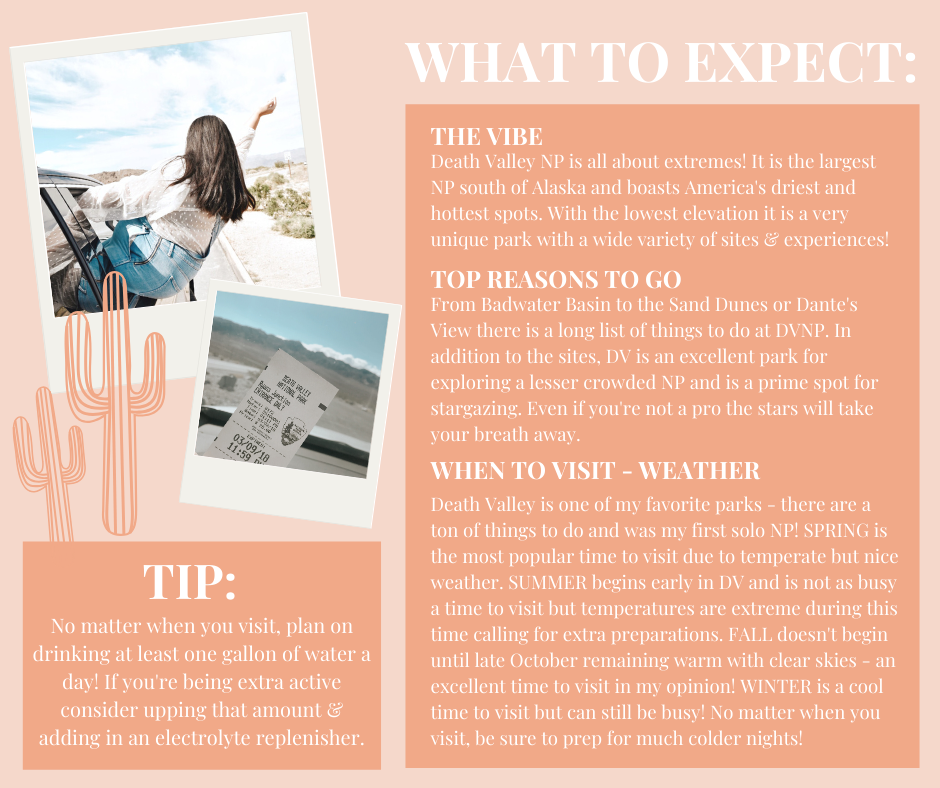

With over 3 million acres, Death Valley is one of the largest national parks in the US with tons to do while you’re visiting! If you plan on spending more than one day here I highly recommend organizing your days based on location, grouping each days activities to one region of the park!
Hiking : If you’re visiting in the hotter months it really is important to avoid hiking. If you really must and its safe, Telescope Peak is a beautiful option. At 14-miles round trip, this hike starts at the Mahogany Flat Campground. If you’re looking for something shorter, give the one-mile hike to Natural Bridge a shot. It’s family friendly and ends with a really cool arch. Some other great options include Golden Canyon, Gower Gulch, and Zabriskie Point
Driving : one of my favorite ways to see a park, especially when short on time, is by driving. With DV having nearly 1,000 miles of road this is an excellent park for this. If you are looking to get off road, be sure you car has the proper clearance and four-wheel drive. If not, you can rent a jeep from Farrabee’s located near the Furnace Creek Visitor Center.
Cycling: while I personally have never biked around the parks I have been suggested to OFTEN! While a typical bike will keep you on the paved roads a mountain bike (and lots of extra gear) can get you out on trails. Want to bike but don’t wanna go solo? Local folks & REI-types offer paid tours!
Stargazing : I might not be a pro but one of my favorite things in the parks is to stargaze. If you do know a bit more, or want to know more, there are some seriously beautiful sites here. Due to such low light pollution Death Valley is actually a certified Dark Sky Park by the International Dark Sky Association. Rangers lead night sky programs where you can learn to better identify what you’re seeing and some science behind it.
If you’re like me an enjoy creating a to-do list for your travels, here are my tops picks on what to see:
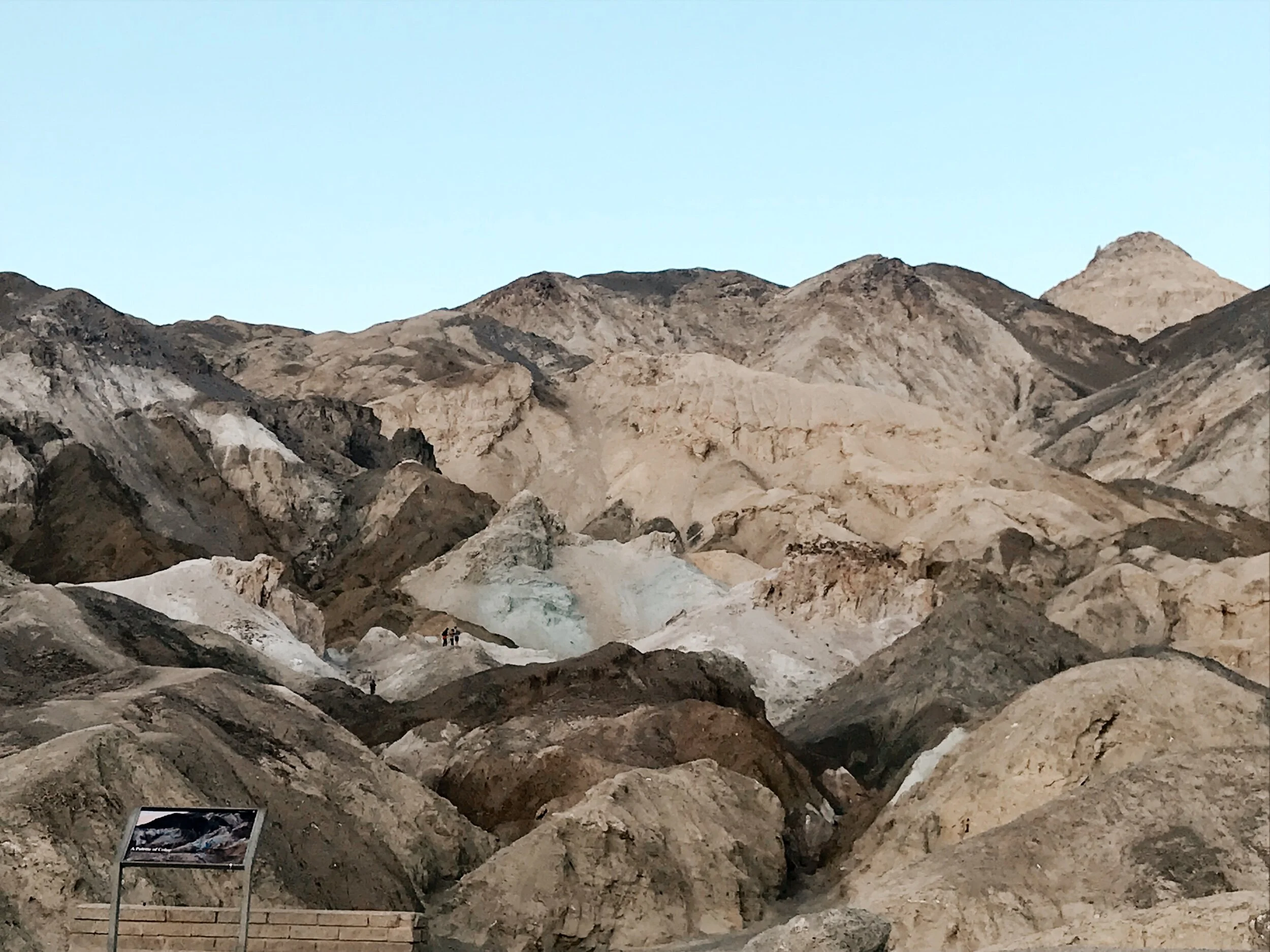
Artist’s Palette - I highly recommend taking this scenic drive, especially at sunset, and pulling off to take it all in multiple times. This is by far one of my favorite parts of the park.
Titus Canyon - while driving through is only accessible by SUV with 4WD, this is an absolute must see if you have the wheels.
Badwater Basin - the lowest elevation in North America can be found here with over 200 miles of salt patterns that look especially amazing at sunrise or sunset. If you love photography this is an incredible place to shoot.
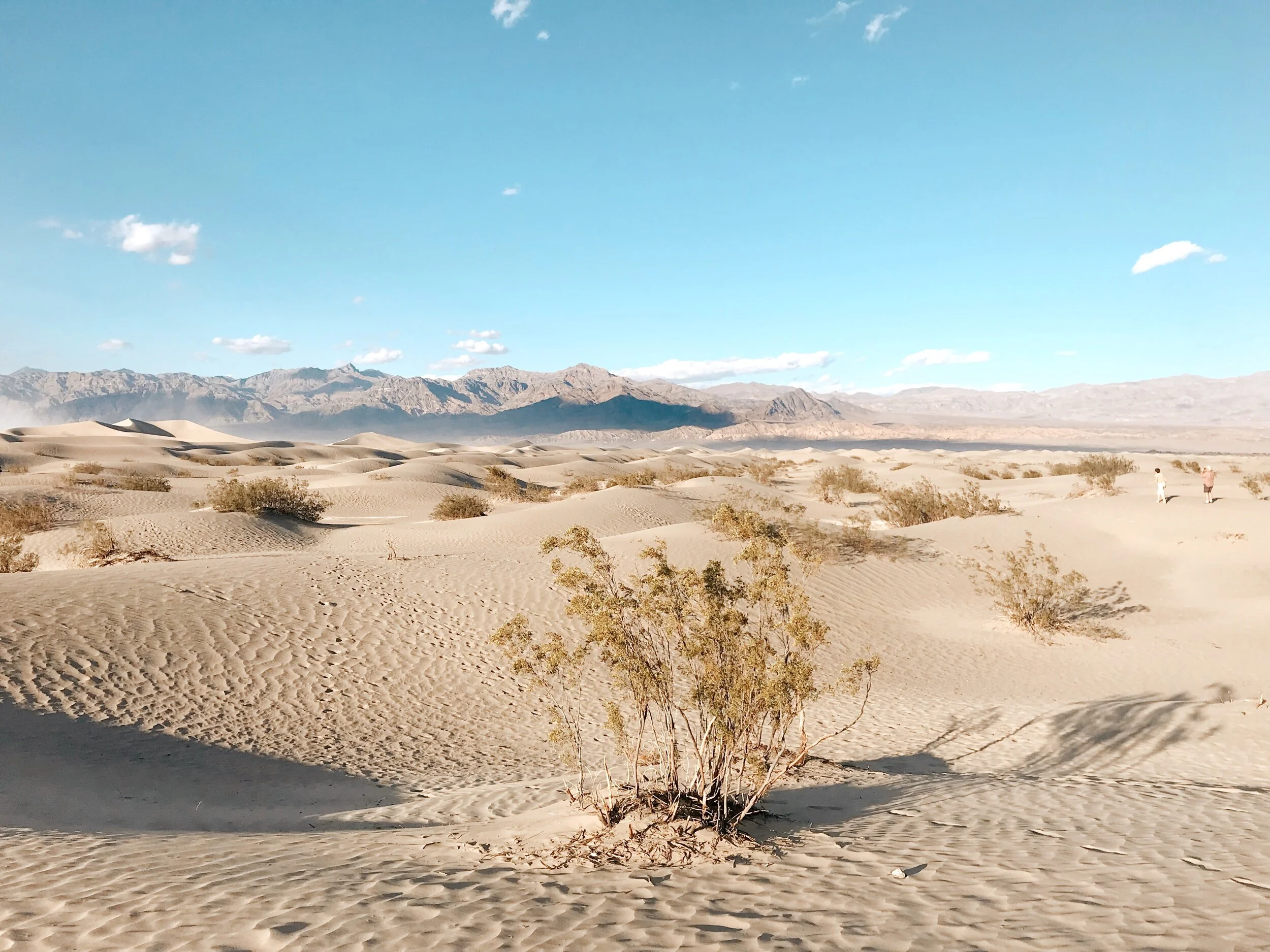
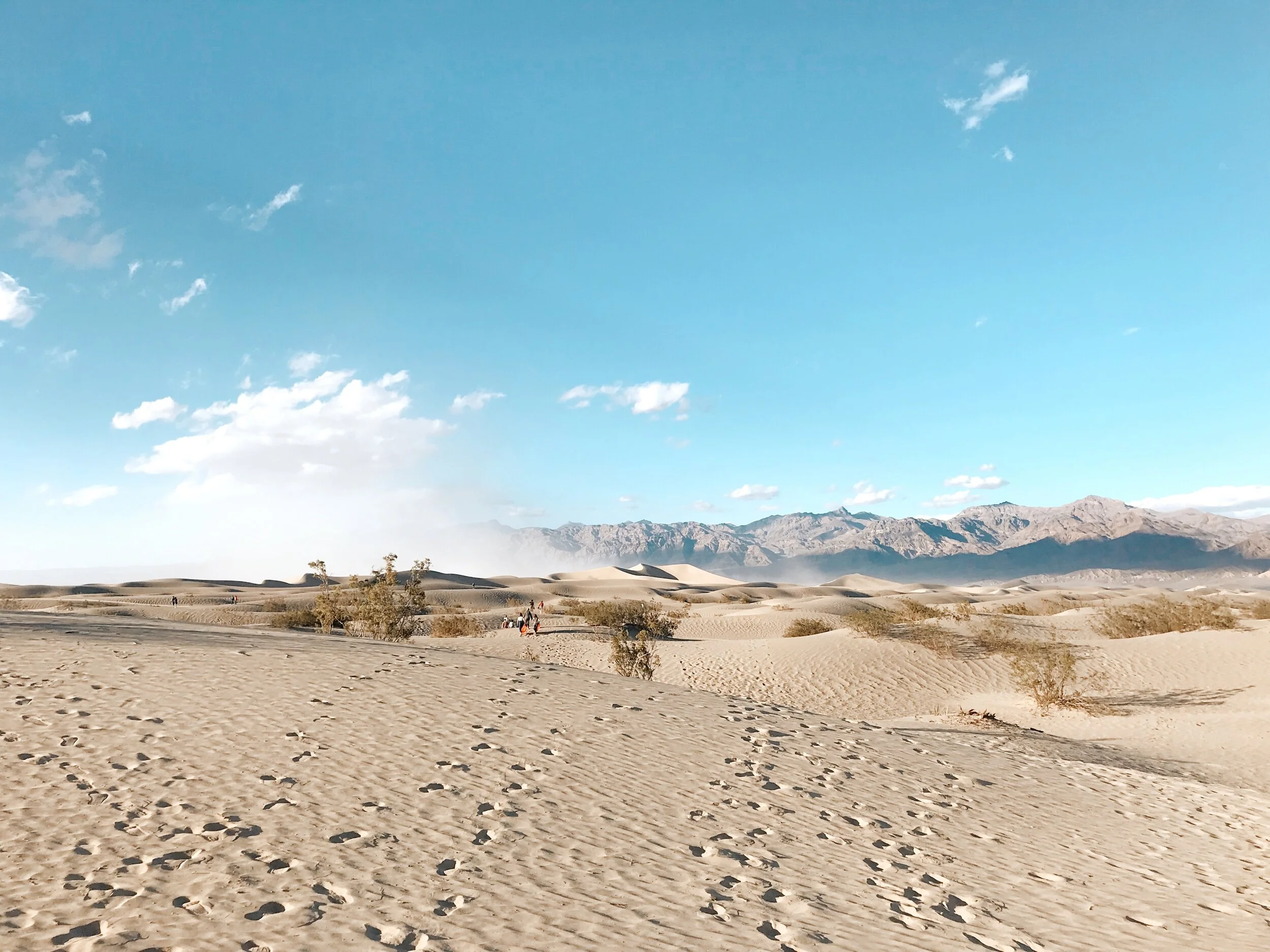
Mesquite Sand Dunes - this was probably my favorite place in the entire park! While they’re not quite the Sahara Desert, they easily climbable, look amazing especially at sunset and are most uncrowded given how expansive the area is. If you’re interested bring a sled or board to “surf” down the dunes.

When I’ve visited I have always camped as that’s my preference, but there are tons of options!
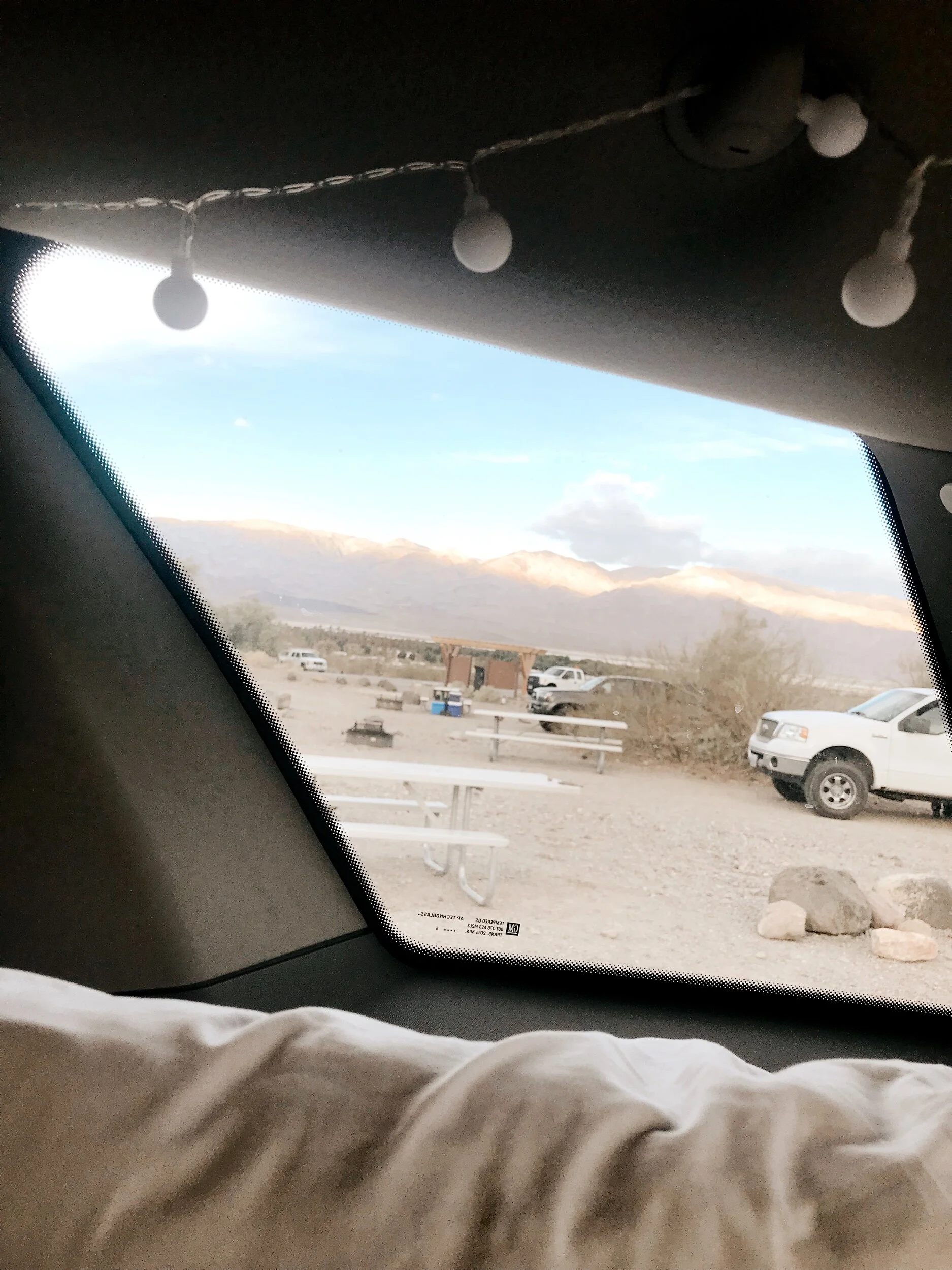
Camping - The park has nine campgrounds - four of which are free! The others start at $14 and all of them are on a first come, first served basis the only exception being 136-site Furnace Creek which is $22. In my time there I stayed at Stovepipe Wells and had the perfect mountain view for sunrise I’m still not over. Unlike many other parks, Backcountry camping is allowed but only in previously disturbed areas. If you opt for this be sure to park you car right next to the road to minimize your impact.
Hotels - In the park its self there are four hotels - Panamint Springs Resort, Stovepipe Wells Village Hotel, the Ranch at Death Valley and the Inn at Death Valley. If you’re looking outside the park there is affordable lodging in the town of Beatty or Death Valley Junction. If you plan on visiting during the summer or any hotter months I do recommend staying at a hotel to help beat the heat.
Airbnb - On the outskirts of the park you can find loads of airbnbs ranging in price from $50 - $500 depending on your groups size, amenities and so on. If you’re looking for a more local experience I would recommend going this direction!

Pack Layers - Even if you plan on visiting in the hottest months, the temps change drastically from the morning to night and you want to be comfortable at every turn!
Be prepared for sand - like many desert parks there will be sand just about everywhere. Be sure to prep for this getting in your car. If you’re like me and sand drives you crazy consider changing shoes between the outdoors and your car.
Get extras - especially water - In the park there are not a ton of options for purchasing water or foods so be sure to do that before you get in the park! Be sure especially to have lots and lots of water - at least a gallon for each day you will be there.
Safety: Like any National Park there are typically special aspects of it - the environment, wild life, weather, etc. that calls for some specific safety precautions- these are those for DV.
DRINK WATER - at least one gallon of water per day is essential to replace what you will lose in sweat. The more active you are, the more you should drink.
Avoid hiking if it’s hot - even though you might be in a lower elevation, the heat in DV is often too much for even the most healthy and experienced of hikers. Additionally, if there is snow or ice present, do not hike.
Travel Prepared - if you plan on taking a hike or driving through the park be sure to stay on paved roads and carry extras like water, food and so on in case your car breaks down or some other emergency.
Be mindful - if at any time you feel dizzy, nauseous or develop a headache, get out of the sun and drink water and/or drinks with electrolytes. Do your best to lower your body temperature by dampening clothing. Heat stroke can be common, but it doesn’t have to be by being aware of your body. Be on the look out for other exhibiting these symptoms as well.
Drive safe - the #1 cause of death at DV is actually from single-car accidents. To avoid accidents be sure to follow the speed limits, shift to lower gears on step grades, wear your seatbelt and air on the side of caution.
Don’t stick your hands or feet where you can’t see - You probably could have guessed there are some dangerous critters around DV. Including rattlesnakes, scorpions and black widow spiders, the best way to avoid being bit or poisoned is by avoiding what you can’t see.
Be aware of flash floods - when it’s raining or has recently rained be sure to avoid canyons and when needed move to higher grounds. Be sure to check for signage where you’re driving as well to be alert for changing roads due to closures.
Don’t explore mines - while it might look cool, the mines around the park are unstable with hidden shafts, pockets of poisonous air.
Get Your Permits - If you plan on going back packing, be sure to secure your free backcountry permit from any visitor center in the park.
Tell someone what you’re doing & set up a check in time/date - any time you’re in the outdoors with spotty service be sure to share your plans with someone outside the park. By setting up a time/day check in you can be assured if emergency arises there will be someone to report you missing.
If you see Marijuana Plants… get the hell out of there - alright so this might sound kind of weird, right? While I personally have zero problem with marijuana (in fact I think it should be totally legalized & decriminalized retroactively as well) if you come across these in a NP it’s likely part of an illegal situation. Having actually had this happen to me in the Redwoods I can tell you some of the folks running these ops will not hesitate to harm you to keep what they’re doing secret. As soon as you realize what is going on, get out. Don’t take photos or look around, just leave. Go back exactly how you got in and be as quite as possible. Get to a safe location as far away as possible and if you would like, notify the Park Dispatch with your exact location (coordinates or physical description).
Have an emergency? Call 911. While your cell might not work in the park, there are pay phones and emergency phones located throughout the park as needed and any will dial 911.