Sarajevo Travel Guide
While I originally visited Sarajevo with the intentions of doing research, I ended up falling in love with so, so much of Sarajevo + their people I’d recommend visiting regardless of research. With a beautiful meshing of East & West, the culture, cuisine and opportunities to take in beautiful outdoor scapes are just a few reasons why you must add this destination to your bucket list! Sarajevo may be small but it is filled with so, so much human history and culture it’s an ideal destination if you especially love those two things. A mix of Zagreb, Vienna and Istanbul, Sarajevo is known as the European Jerusalem due to its monuments of 4 main monotheistic religions. WWI began in Sarajevo, the Winter Olympics were hosted there in ‘84 and was also the location of a recent war + genocide.
To Do
Free Walking Tour - I’ve linked the group I went through given how positive my experience was! A free walking tour is a great way to get the layout of the city + be directed to points you may have noticed, but not understood the significance of. For example, all around Sarajevo are red painted spots known as “Sarajevo Roses” that are a reminder of the mortar shelling from both earlier + recent history.
Full Day Srebrenica Genocide Private Tour - in going to Sarajevo, my main purpose for visiting was visiting sites at the heart of the Bosnian Genocide, a topic I had been studying, researching and writing on for nearly 5 years. While this portion of history isn’t for everyone I can’t recommend this tour group enough if you choose to make it a part of your experience. The topics of war and genocide are complicated and uncomfortable but are essential in learning about to ensure they do not continue happening. I truly believe travel is important because it exposes us to others different, yet the same. Take your travel experiences as an opportunity to learn and grow, you won’t regret it.
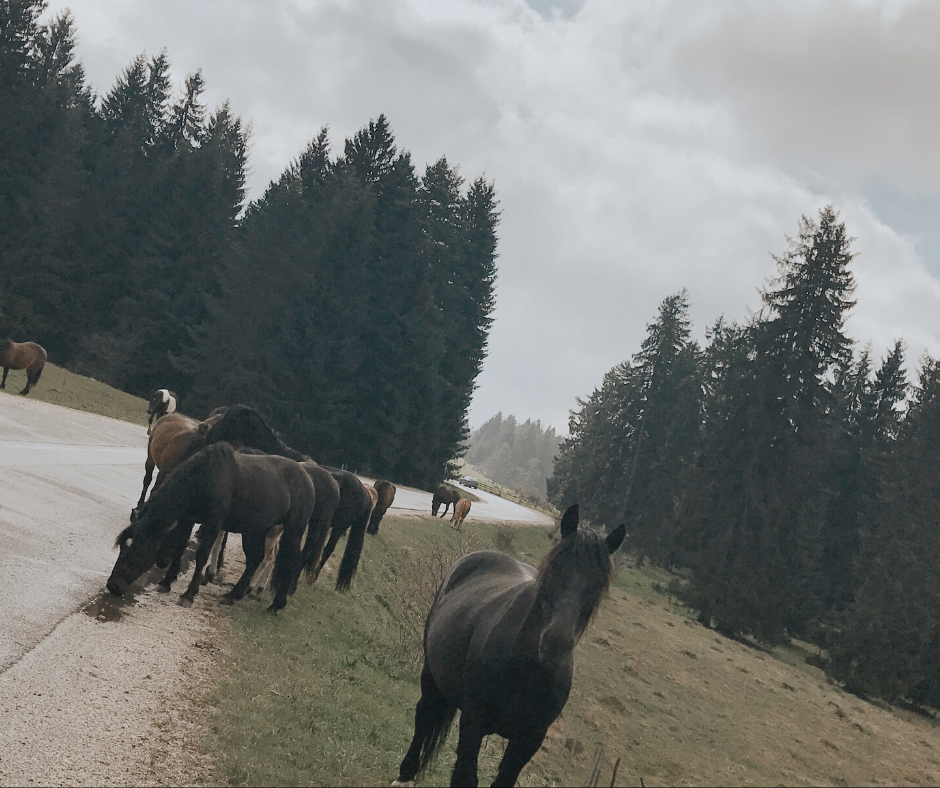
On this particular tour we started the day around 8 am meeting at the tour shop and spending the next two or so hours on the road towards Srebrenica. The scenery on the way is grogeous! We even saw a group of wild horses - we were able to pull over and take photos but didn’t get too close! This was really special as a group of women traveling from Mongolia has never seen horses before and were even more excited when I was able to share my (small) background riding. During the drive the guides will explain how the war + genocide came to be with a mix of personal and historical references and photos. On the way and the closer you get you pass through many towns that had similar events take place. Acts of genocide took place all over the country, Srebrencia is just the largest site of such attrocities. Some of these towns include, Sokolac, Vlasenica, Milici and Zaklopaca, Kravica, Nova Kassaba, and Bratunac.
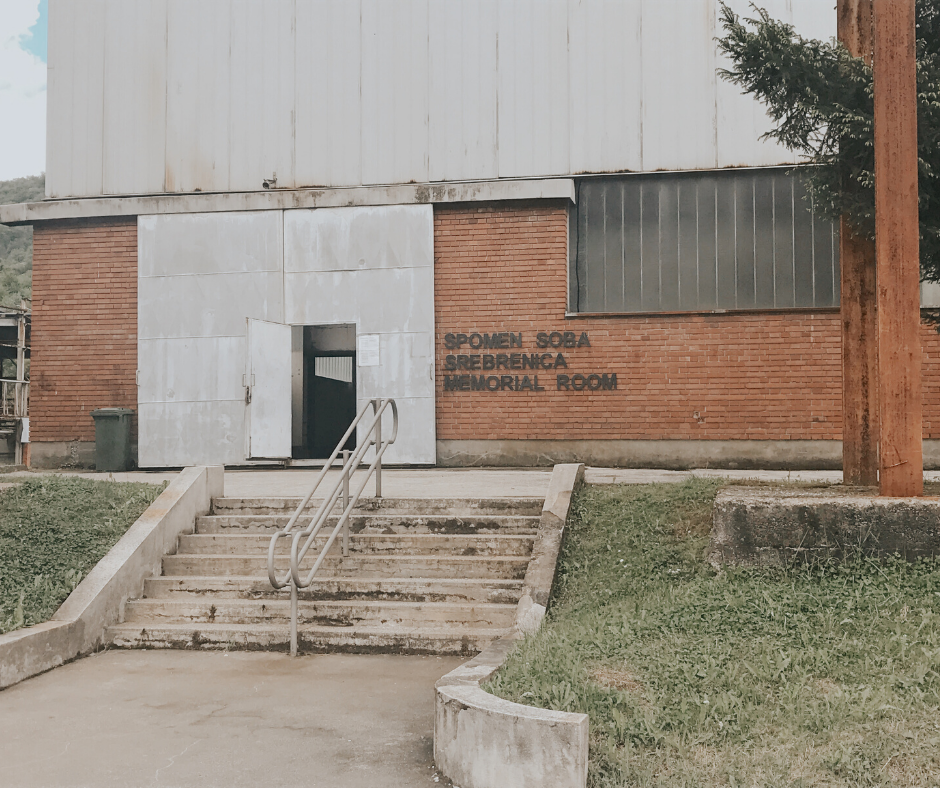
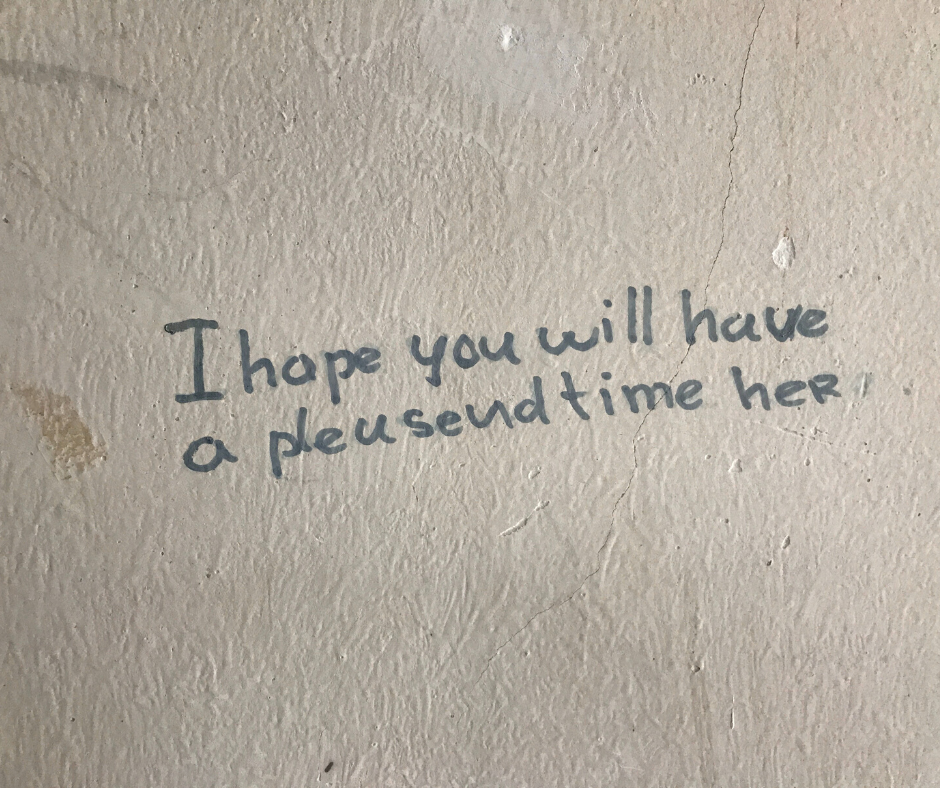
Our first stop was at Memorial Centre Potocari. Here, we participated in a locally guided tour and history lesson at the memorial centre with a guide. The guide in charge themselves is a survivor of the events and was very open to discuss and answer questions. I found this part particularly helpful in my research (skip to the tab about that to learn more). Here, over 6500+ were held. Additionally, you explore the Dutchbat UN base where you can see and understand the failure of the international community.
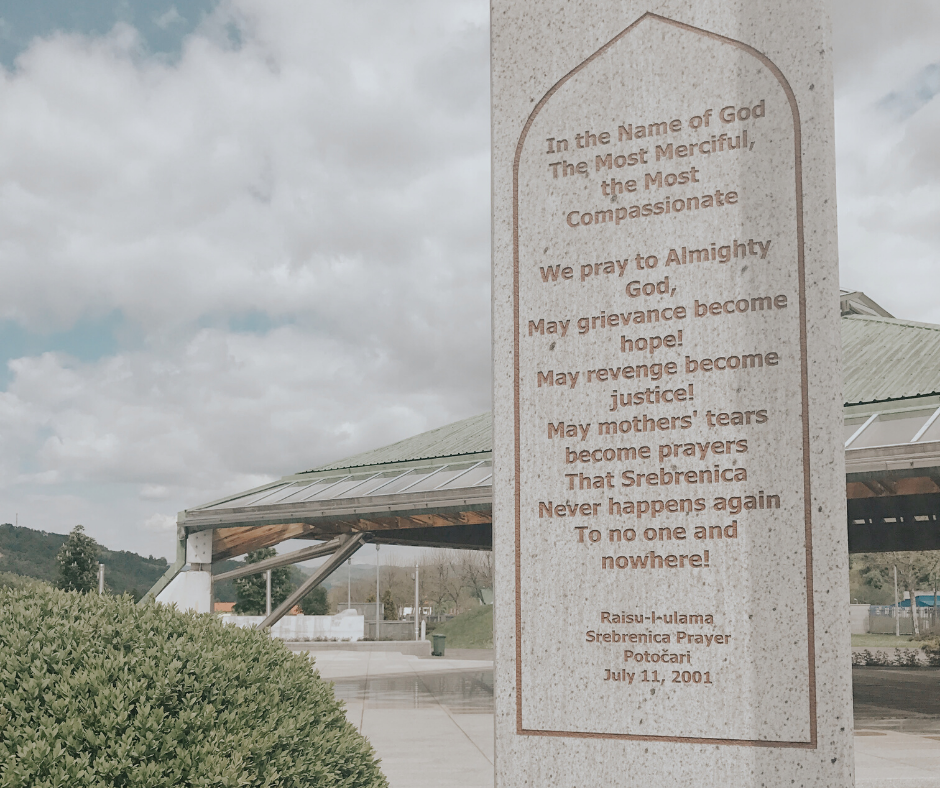
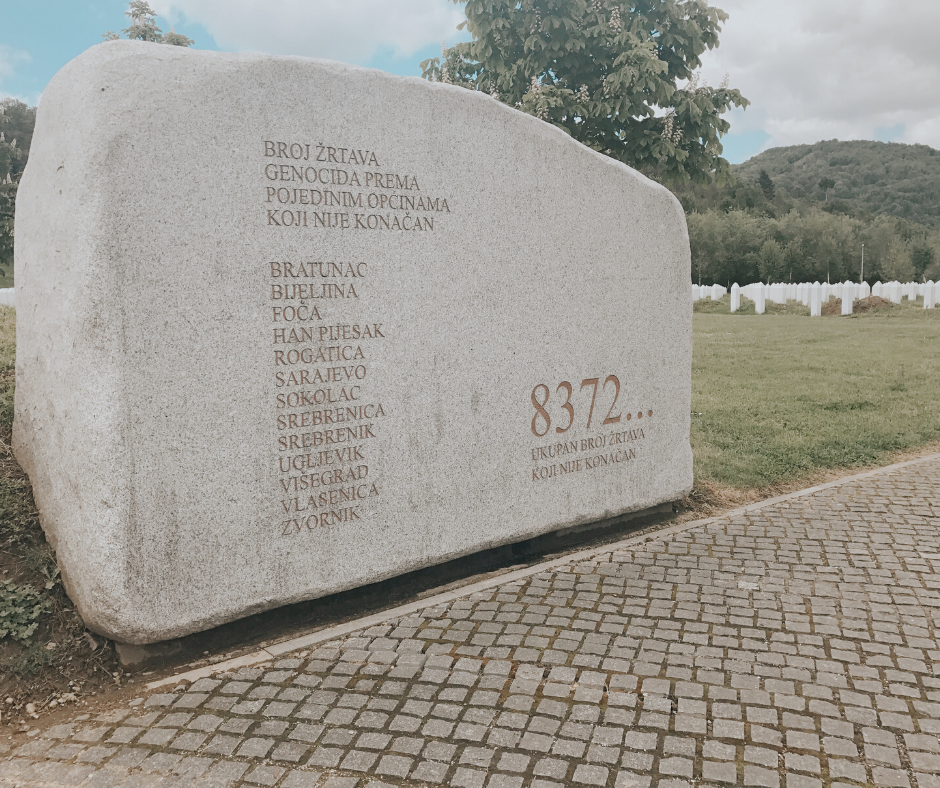
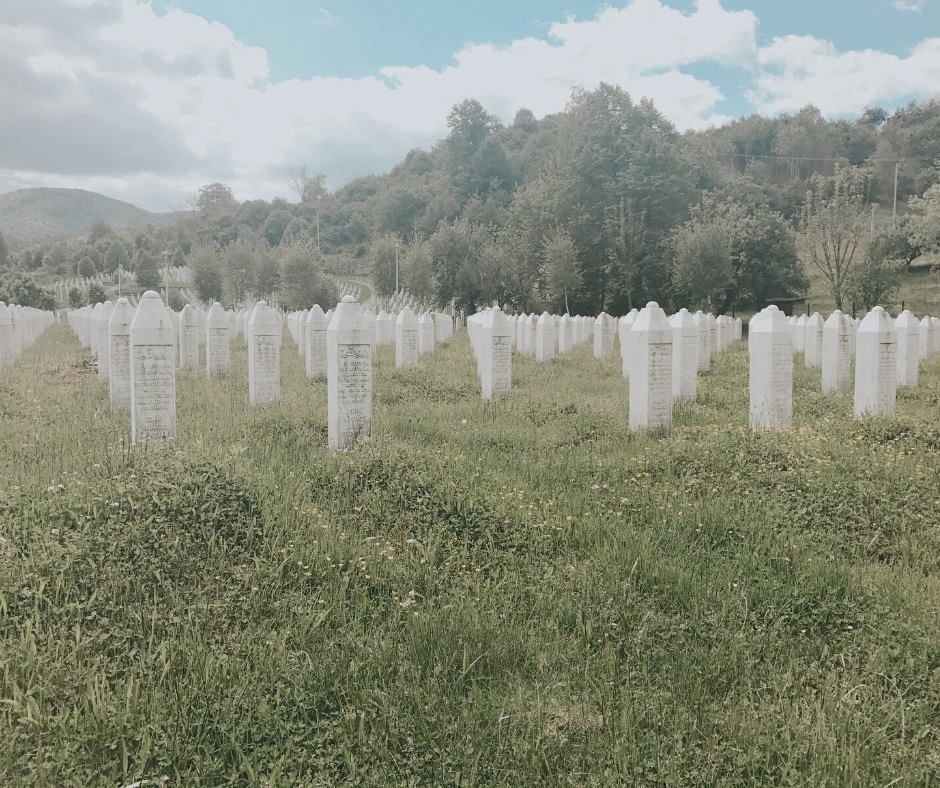
After the centre, we had the opportunity to visit the graves and other sites and memorials around there. It is sombre and shocking how many headstones there are and how fresh the graves dug are. Remains found - some of which were actually found while I was on this tour at one of our stops - are constantly being added to allow a final resting place and dignity.
After around three hours at our first stop, we made our way to Srebrenica town for a bit of exploring and lunch. While lunch isn’t provided, meal discussion is over more history and just chatting amongst everyone- something the tour guides made even more enjoyable than expected. We got back into Sarajevo around 6 or 7!
‘84 Olympics Bobsled Track - While I personally didn’t do this it was highly recommended as something to do! You can walk the abandoned track - either solo or with a guide. There is a ton of graffiti you can view as well!
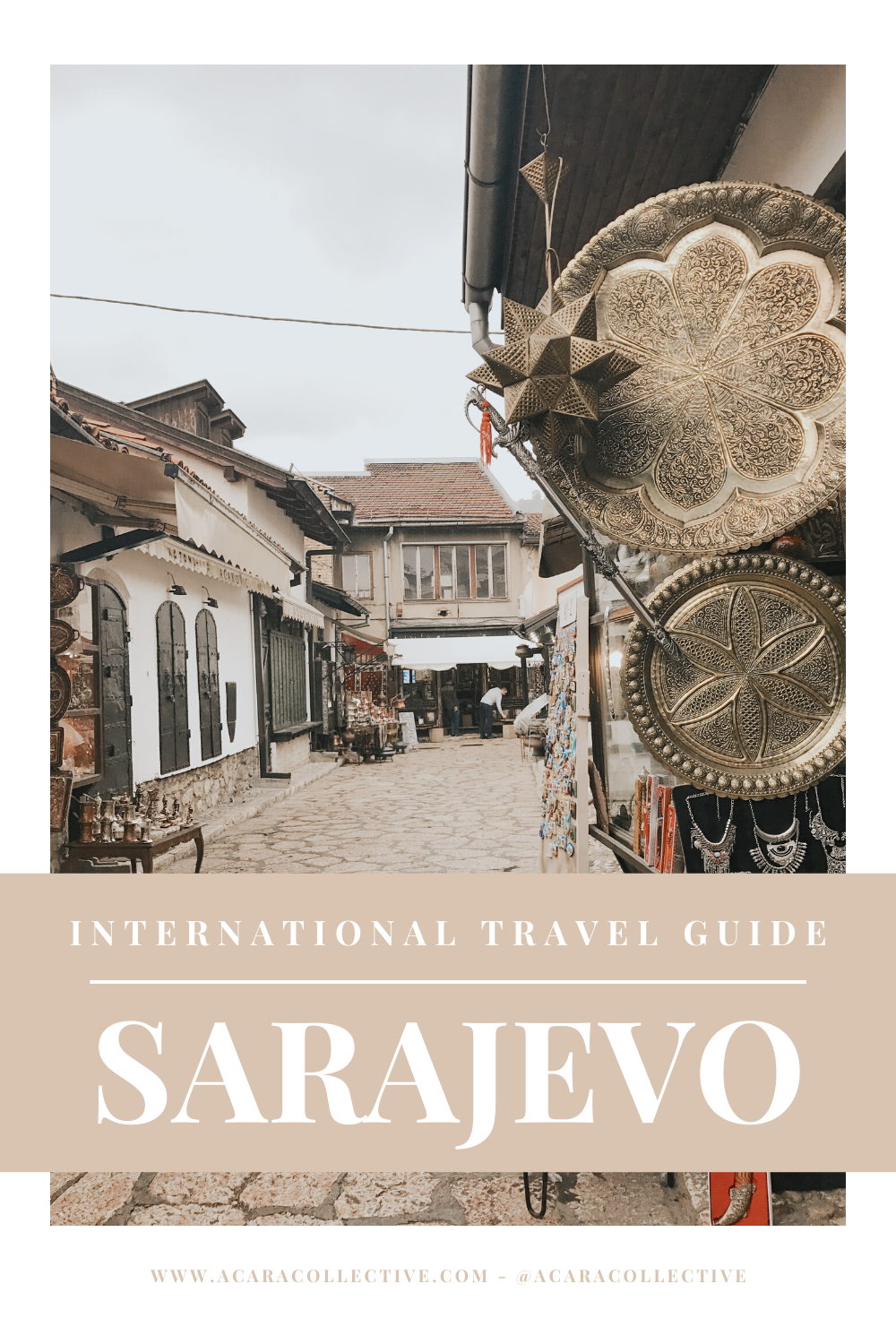
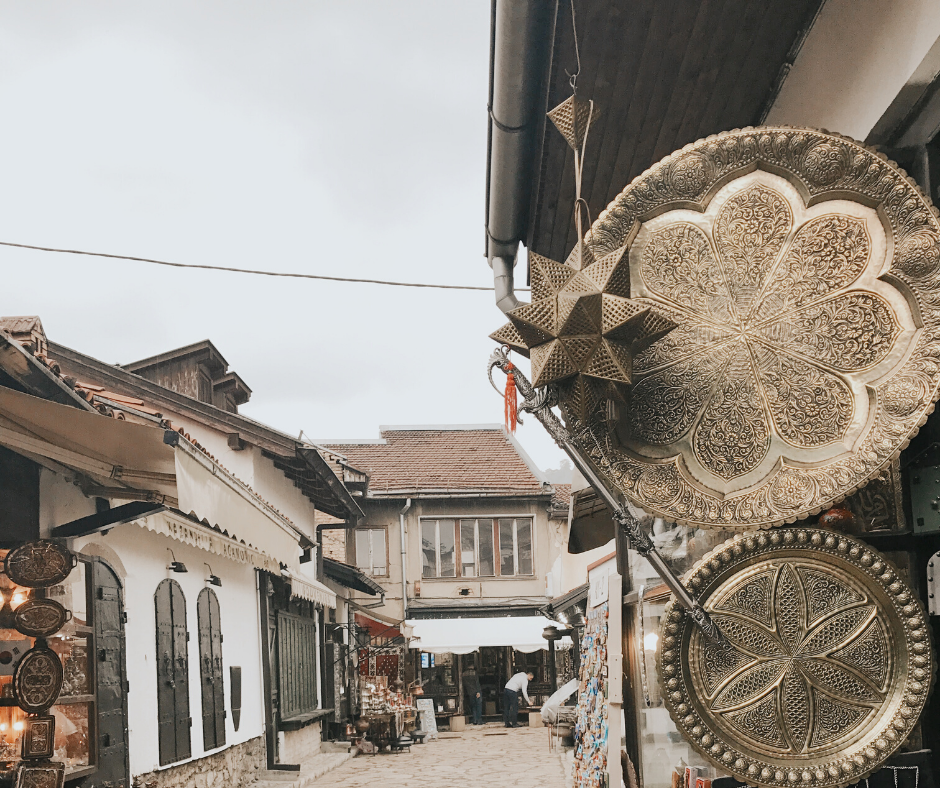
Bascarsija - In Sarajevo's historic downtown area, this is a must-visit area. With a winding maze of alleys and shops, you’ll love getting lost, trying local bites + enjoying all there is to offer.
The Tunnels - during the seige in the 1990’s, these tunnels were constructed by citizens so food and supplies were able to come in and locals could escape out.
Vrelo Bosne - One of the country’s top natural landmarks, the “spring of Bonsia” is beautiful and something you can’t miss while exploring the city.
Religious Sites - Commonly refered to as the Jerusalem of Europe, Sarajevo has many different religious sites both stunning + historical from Catholicism, Orthodoxy, Islam and Judaism.
Presidential Palace + Town Hall - Both excellent examples on the history of the Austro-Hungarian empire, be sure to dive into to these rich parts of Sarajevo’s history.
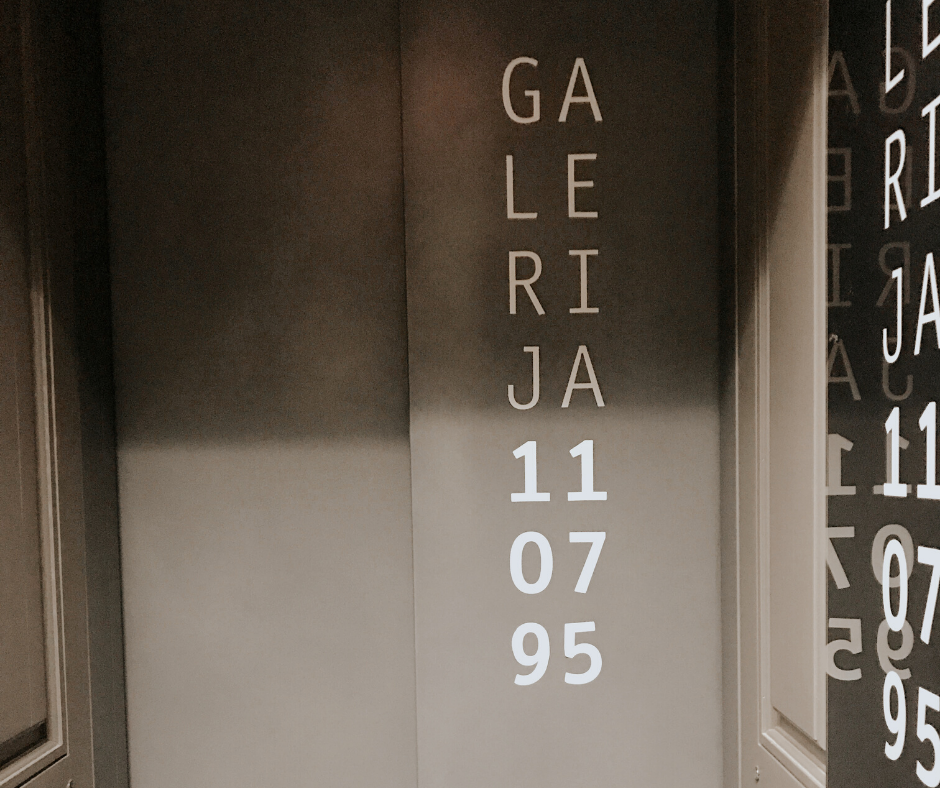
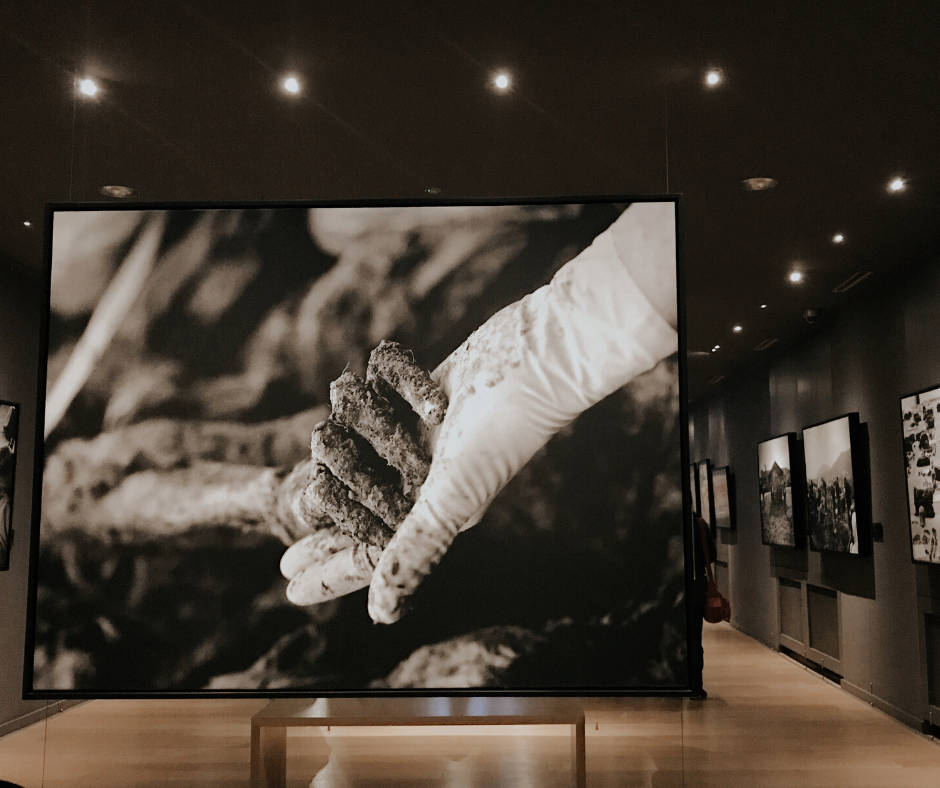
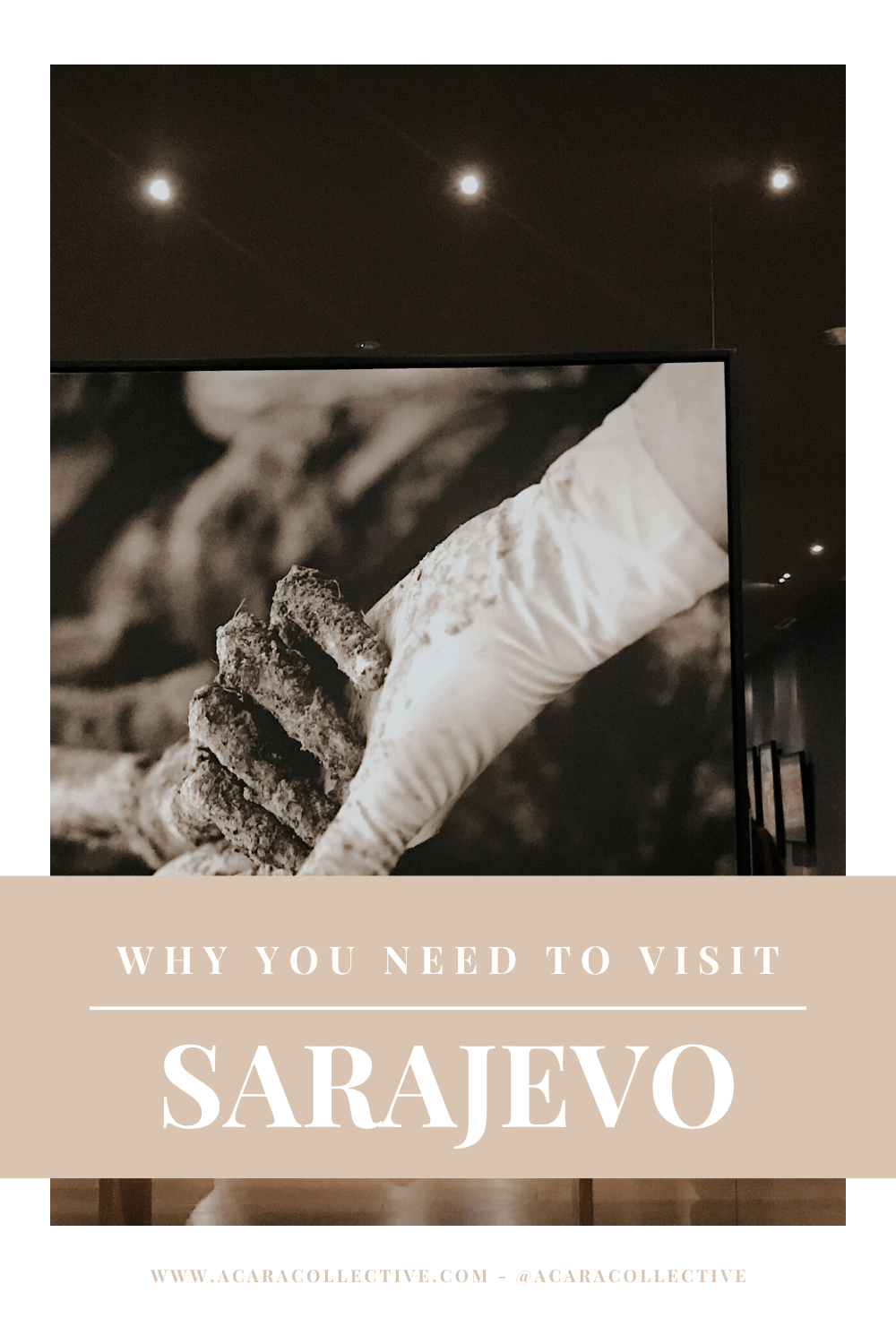
Gallerija 11 07 95 - My absolute favorite stop is this small but powerful gallery focusing on the genocide + narrative of Srebrenica. The stunning gallery details the massacre via photographs and documentary movies. Be sure to get the audio guide - it’s worth it!
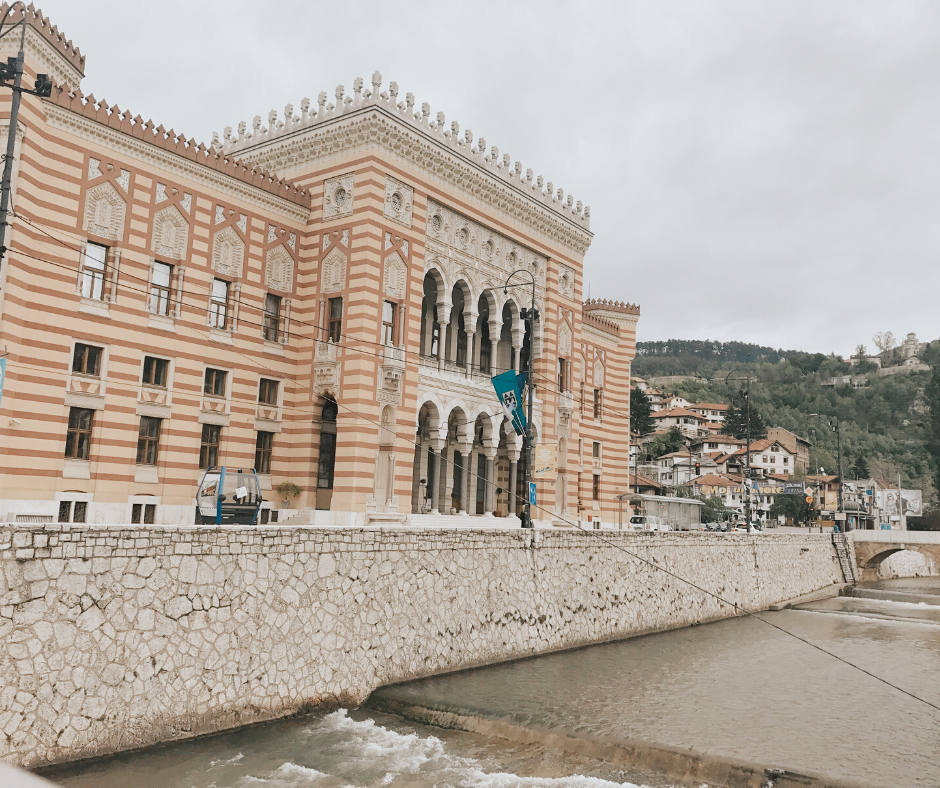
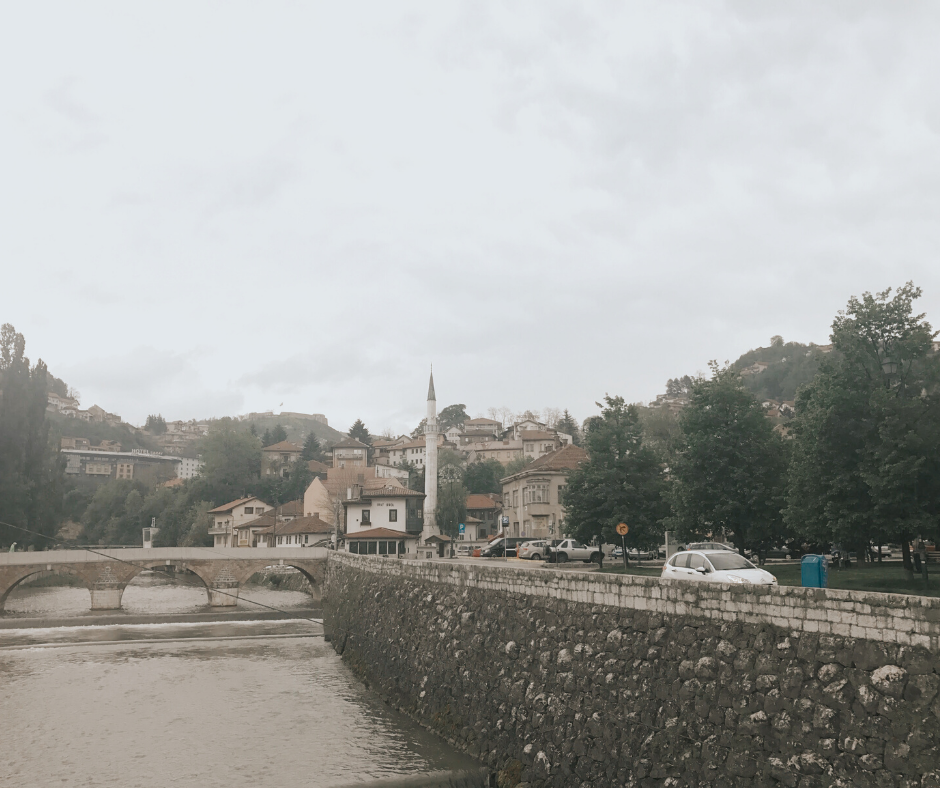
Latin Bridge - while this might not be the main landmark, this bridge has massive historic significance as the location of where Franz Ferdinand + his wife Sofia were assassinated ultimately starting the First World War.
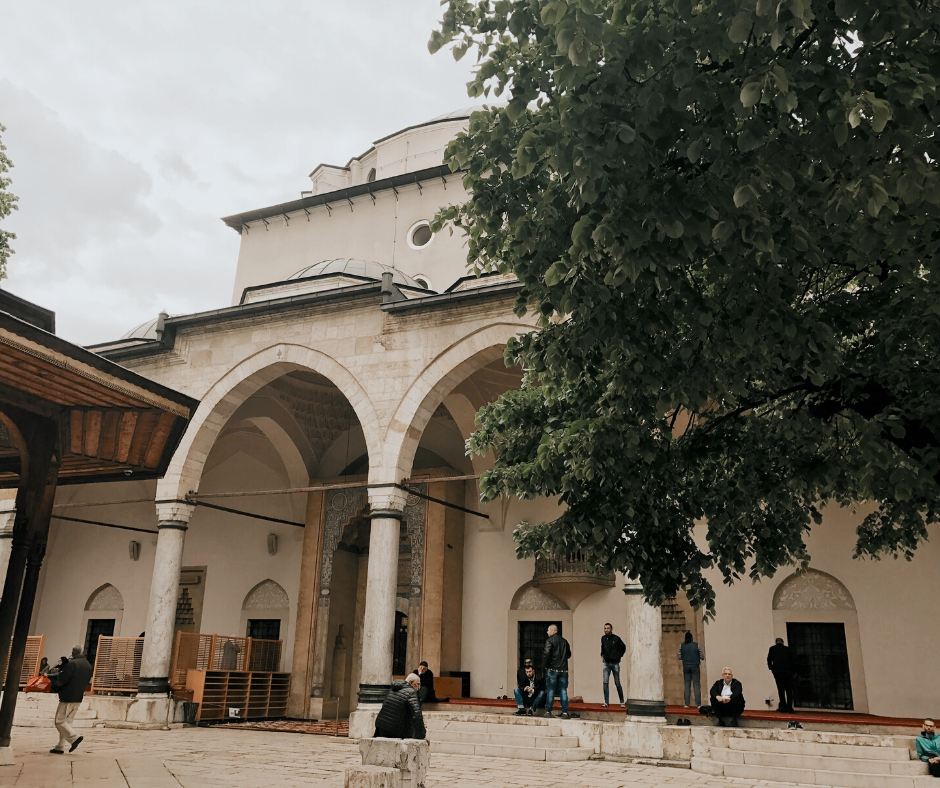
The Gazi Husrev-beg Mosque - This (still) operation is a religious monument is located in the heart of Sarajevo’s Bascarsiia district is a must see. The building is beautiful with Ottoman architecture and the courtyard is so stunning.
Sarajevo Brewery - Dating back to 1854, this is supposedly the first establishment to start a systematic production of beer in Sarajevo. You can visit the museum or even arrange a tour of the brewery.
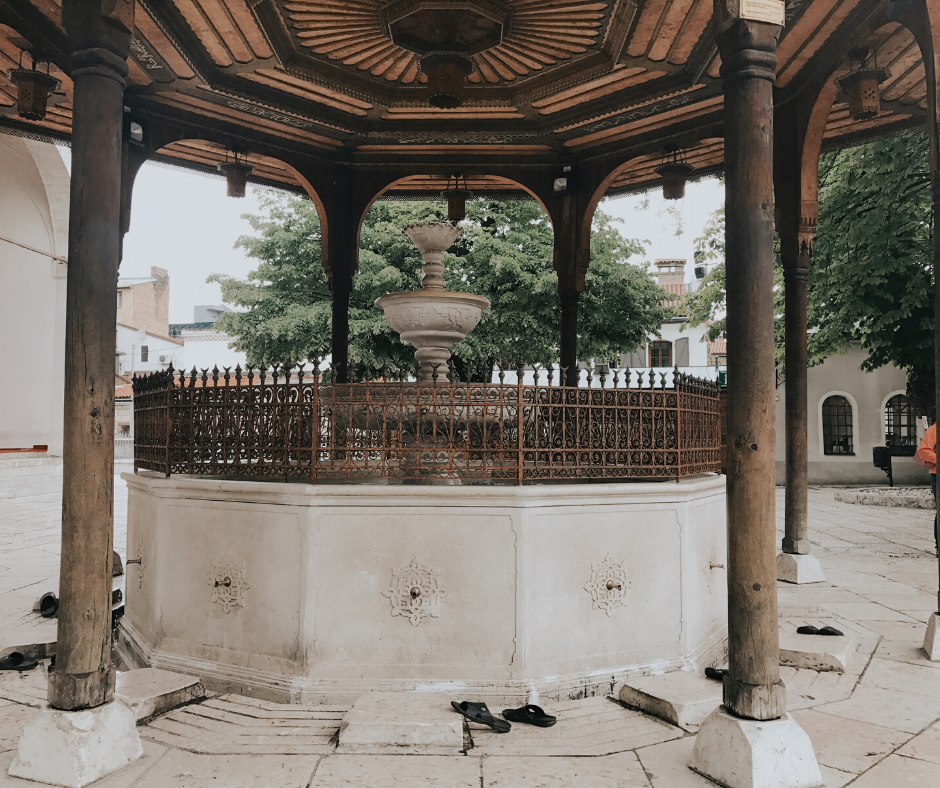
Sebilj Brunnen (Fountain) This fountain is the landmark of the old city and something you’re likely to stumble upon while wondering around. Water from here is drinkable!
To Eat
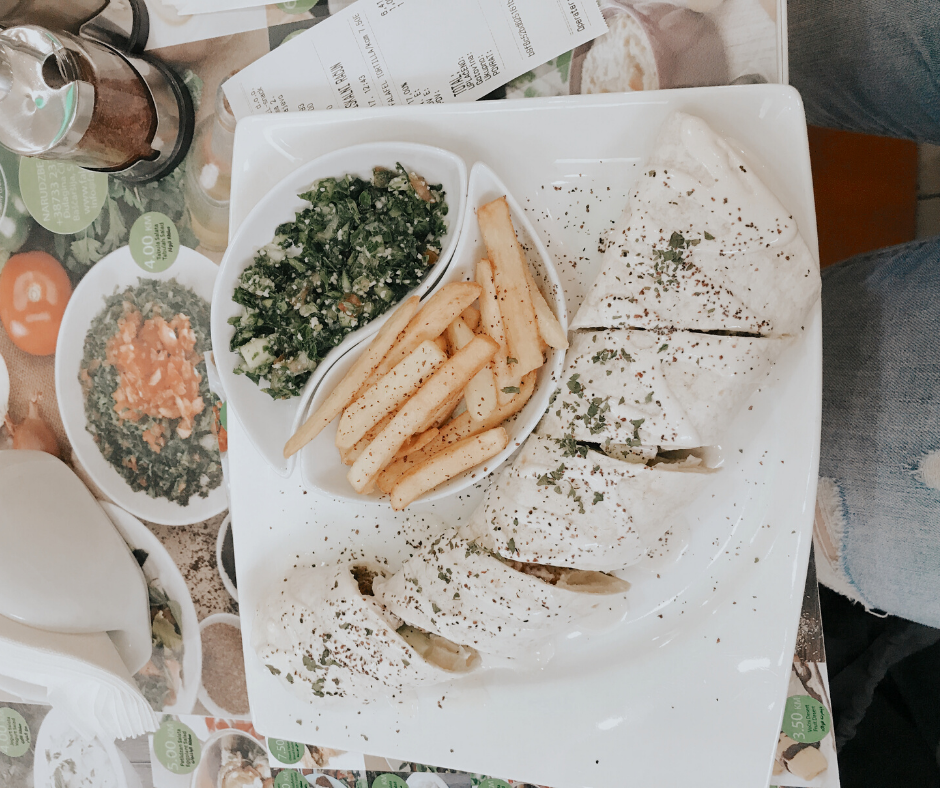
Cevapi - it looks like a sausage made from minced beef or mutton. It’s Bosnia’s national disk and something I’ve been recommended over and over!
Somun - a type of Bosnian flatbread resembling pita bread, which comes with a plate of cevapi.
Baklava - it’s not super traditional for Bosnia but the sweet dessert is a delicious must!
Borek - The ubiquitous snack in bakeries around Sarajevo and most of the Balkans uses filo pastry with either minced meat, spinach, cheese or potato fillings. You can buy these buy the slice or even the whole “pie” and are widely available around Sarajevo! Hands down, this was my favorite thing I had in Sarajevo!
Klepe - If you like ravioli or pierogis, the klepe is a Bosnian dumpling filled with either beef, lamb or cheese. The dish comes with a garlic sauce or yoghurt.
There are MANY, MANY more bites to try! Be sure to keep an open mind and be ready for hearty, delicious meals!
My Research
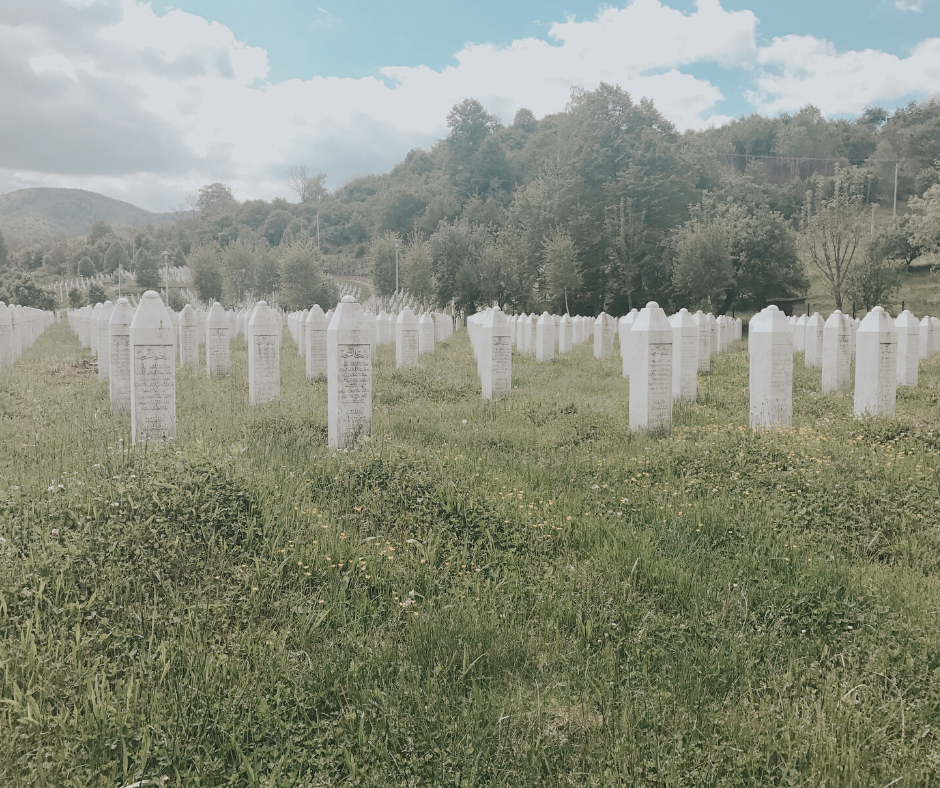
Like I’ve mentioned throughout the post, what initially brought me to Sarajevo were years of researching the Genocide that took place here in the early to mid 90’s. In my time here, I conducted interviews, saw things first hand and really rounded up my research. While there is a lot to study from these experiences, I focused on how the genocide, specifically the systematic use of sexual violence - something even locals don’t talk about to this day- has informed international law & policy. If you’re interested on learning more, I recommend checking out deposition from the War Crimes Trials for first hand accounts and articles found here, here and here. As you can see, there is not a lot of published information on the topic and certainly isn’t widely taught in an educational setting or in law courses.
Tips
Know the difference between Bosnian and Bosniak - with a complicated history, this tiny difference in spelling is actually a huge difference. A Bosniak is an ethnic Muslim; a Bosnian is someone from Bosnia, or their nationality. There are Bosnian Bosniaks (Muslims), Bosnian Serbs (Orthodox Christians), and Bosnian Croats (Catholics). Honestly it probably won’t come up, but if it does know the difference.
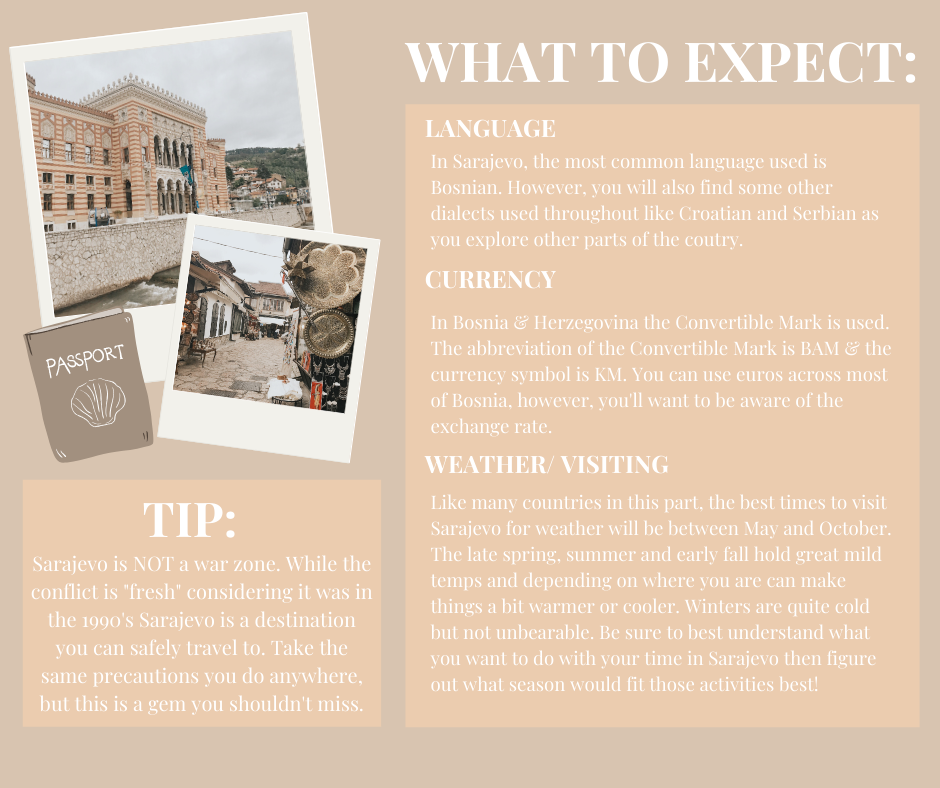
Not as good of exchange rates - unlike neighboring countires, the exchnage rates in Bosnia take up to 5 percent. If you can, consider exchanging outside of Bosnia. If you do need to echange in Bosnia, all of the office can be found along Ferhadlia Street.
Have cash on you - Bosnia is a cash-based society. While some places do take card and there are ATMs, there is typically is up to a 7 percent fee. To be safe, plan on cash.
Don’t get into politics - unless you really know your stuff, it’s best to stay out of politics. Bosnia has gone through a lot in the past decades and is still healing. Take in the history but remember you are in no place to comment beyond rage that the international community didn’t do more.
Wander Here - central streets are safe for walking, even into the late evening. Less busy areas around the city should be traveled with a guide though. Keep to the basics of safety rules and keep an eye on private things when in crowded areas just like you would any other time.
Feel free to Tip - tips are welcome for almost every service almost in all places, typically 10% of the cost of the rendered service.