
ACC Reads + Reflection - June 2020
Welcome to the first ACC Reads + Reflection! I decided to create this series of sorts after the commitment to furthering my own learning + sharing with my audience Anti-Racist, Social Justice oriented works as well as works by Black authors. Every month I’ll be sharing at least one work I’ve read in a book report sort of fashion that I hope can serve as both a resource but also a recommendation for you to continue anti-racist + social justice driven learning in your own time.
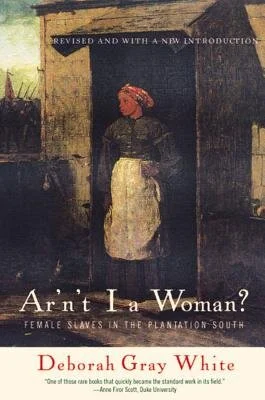
This month’s work - Ar’n’t I a Woman? Female Slaves in the Plantation South by Deborah Gray White - reviews scholarship on enslaved women specifically of the Reconstruction South. In her work, she explores + extrapolates the intersection & dual burdens of race and gender via stereotypes and various experiences of enslavement. White illustrates how black women experienced “freedom” in the South, as well as how they resisted economic and sexual oppression, maintained a sense of womanhood and championed their families despite their forced circumstances. As noted in the introduction, “This study aims to enrich our knowledge of antebellum black culture and to serve as a chapter in the yet unwritten history of the American black woman” (Gray White).
If you are interested in reading this work, you can purchase at various locations online, however, I recommend purchasing through these black owned book stores: Uncle Bobbie’s Coffee & Books or Eso Won Books.
TW: This work + reflection contain racism, physical and sexual violence, genocide, and many disturbing experiences.
As mentioned, this work primarily focuses on enslaved women of the south during the reconstruction period. Due to the vast nature of this time period, I will be sharing takeaways, information and so forth organized the same way the work is organized by section (outlined below). I will also be including quotes (my favorite part of reading) that really stuck out to me, offered insight, gave me an aha or learning moment or those I believe are helpful in the learning/listening process.
Chapter 1 - Jezebel and Mammy: The Mythology of Female Slavery
As can be inferred from the chapter title, this chapter focused on extrapolating the mythology of Female Slavery with specific focus on the myths of Jezebel and Mammy. Here, the “peculiarly American mythology” surrounding the “race and sex ideology” regarding Black womxn is explored. While I personally have had some education on these particular images/ideologies due to various literature + history courses this was an incredibly educational portion of the study in drawing connections between these ideologies and myths to stereotypes, ideologies and myths still used today.
On The Jezebel Myth
Stemming from the idiocy of White Colonizers, the Jezebel myth is one that remains pervasive today despite how absolutely ludicrous it is. The study offers many historical antidotes on its creation + evolution. “The idea that Black women were exceptionally sensual first gained credence when Englishmen went to Africa to buy salves. Unaccustomed to the requirements of a tropical climate, Europeans mistook seminudity for lewdness” (pg.29) Further on, the study expresses how this insidious myth contributed to the catch-22 of enslaved womxn. “If, in order to ease their burdens of slavery they made themselves available, they only fulfilled the prophecy of their lustfulness, which in turn made it more difficult for other Black womxn to reject the overtures made by white men” (pg. 38). If the myth of Jezebel was not already disgusting, the myth was later used in the South (and elsewhere) to in fact argue in favor of slavery, claiming slavery helped Black womxn - specifically the Jezebel “reform”. “slavery afforded the female slave encouragement to lead a virtuous life. If she chose to avail herself of the opportunity, the institution of slavery would throw a shield of protection around her. In some slavery rhetoric, therefore, Jezebel was made chaste and the idea of chaste slave women was soothing to many Southern whites” (pg. 45)
On the Mammy Myth
As can be seen in even modernized depictions & stereotypes of Black womxn (see Mrs. Butterworth), the Mammy myth “was the woman who could do anything and do it better than anyone else. Because of her expertise in all domestic matters, she was the premier house servant” (pg. 47). While the study notes the ways in which enslaved women who were perceived to this myth may have been treated “better” by being trusted advisors or overseer’s of the house, the myth remains misleading such was the Jezebel myth. “Both images have just enough grounding in reality to lend credibility to stereotypes that would profoundly affect Black women” (pg. 49). This can be seen in various roles of enslaved women in turn with the raising of their enslaver’s white children. While much attention was paid to her charges, this fully affected her own ability to care for her own children - a fact few enslavers cared much about. As this myth ages with the womxn to whom it was applied, it was explained how despite “the mythology of Mammy [being] well cared for in old age, in reality many old female house servants were mistreated and many were abandoned.. In final years she was of little value to her owners, and despite her frail condition they took her to the woods, built her a little hut with a mud chimney, and left her there to support and care for herself” (pg. 54-55).
Overall this chapter was incredibly illuminating in drawing connections between the past and present. It also was helpful in understanding the roots of racially charged and problematic aspects of stereotypes that continue to be pervasive in society. Not that taking down + addressing these problems weren’t important before this information, they are even more important now having a deeper understanding of their history + insidiousness.
Chapter 2 - The Nature of Female Slavery
The beginning of this chapter begins with the following quote I believe is very informative + fitting to the overall takeaway from the chapter: “Slavery is terrible for me: but it is far more terrible for women. Superadded to the burden common to all, they have wrongs, and sufferings, and mortifications peculiarly their own”. From the moment they were kidnapped from their homelands, womxn were strategically placed on ships for easy access by seamen. It was important to note, despite the horrors faced given their placement on the ship “freely” they often lead insurrections while at sea.
If womxn survived this passage, they were again faced with additional horrors as a result of their intersection of race and sex. Initially, enslaved peoples were predominantly men. It was not until the “realization” by enslavers that they could exploit the enslaved womxn to produce additional enslaved peoples that the gender break down “leveled" out. Another important aspect of this chapter of the study was its focus on how reproduction was impacted by slavery. Not only were womxn forced into dangerous situations with their health, they also were “underrepresented in the fugitive population {due to] childbearing” (pg. 70). The study notes, “Females ran away less frequently than men [due to the] fact that women tended to be more concerned with the welfare of their children, and this limited their mobility” (pg. 71). Given these situations, described by a historical reference in the work as placing “three times the risk of failure” in attempting self liberation, womxn “induced emotional trauma and psychological torment” (pg. 74).
This chapter also note specific ways in which enslaved womxn specifically resisted. Some “purposefully acted like a fool or idiot in order to take advantage” while others “murdered their masters, [some] were arsonists…” (pg. 78). The same resistance was examined in relation to sexual violence that was incredibly common for many reasons including but not limited to: legal status/laws protecting black womxn from white or non-white men, and the dynamics of enslavement. Lastly, the chapter notes how womxn potentially resisted by complaining of illness - menstrual or similar. Gray White quotes George Washington noting, “[he] spoke of slaves who “will lay up a month, at the end of which no visible change in their countenance, nor the loss of an ounce of flesh, is discernable; and their allowance of provision is going on as if nothing ailed them” (pg. 81). Gray White makes note, however, that it may be impossible to tell from a historical stand point what was feigned or real illness due to how enslaved womxn were believed, or rather not believed. I found this point specifically interesting due to previous education on how Black womxn specifically are hurt by our current medical system. From bigoted medical professionals to a continuation of perpetuation a “superhuman” persona to understanding + believe their pain - I believe there is a large connection between what Black womxn experience now in health care and what was experienced or (not) believed during the period (and beyond) discussed in this study.
An important excerpt from this chapter lies in the wrap up of the chapter: “Female slave bondage was not better or worse, or more or less severe, than male bondage, but it was different" (pg.89)
Chapter 3 - The Life Cycle of the Female Slave
This chapter focuses on how each individual of any society faces shifts and changes throughout life and how these shifts and changes speak, more of less, to different seasons, experiences and expectations. Here, the work extrapolates these changes for enslaved womxn - both informed (again) by their enslavement and gender. Girlhood was unlike others of the time period and perhaps even today given “there was almost no activity engaged in by girls that was not, at some time or another, also engaged in by boys” (pg. 92). This concept is really explored in this chapter.
Next, as girls enter the age no longer considered children, they would join with other women on the “trash gang”. “Joining the trash gang has to be a more significant turning point for boys than girls since this work gang, made up of pregnant women, women with nursing infants, young teenagers, and old slaves, was predominantly female” (pg. 94) While this transition exposed girls - perhaps for the first time - to the stages of womanhood they could soon expect, there were aspects that were not discussed. Once older, womxn would marry and soon be expected by their enslaver to produce children despite knowing very little about it up to that point. “Even if we take into account the expectations that both slave society and planters had of the adolescent female salve, we can only just begin to understand the pressures greeting her to the threshold of marriage and motherhood. On one had she had to deal with the fact that her master wanter her to have children for his profit’s sake and that if she did not demonstrate her ability to give brith she might be sold away from her family and friends. But then there were the values held by the slaves, especially by slave mothers, who, not wanting motherhood to be taken too lightly, cautioned the young woman to proceed with courtship slowly, to take her time before settling into womanhood. Marriage was hallowed in slave society for reasons held by slave community and the individual girl, but at the same time masters and mistresses preferred and urged settled unions among their slaves for their own selfish reasons” (pg. 109 - 110).
Ultimately, the chapter concludes with the stark remark, “At no stage in her life cycle was the plantation slave woman immune to the brutality of the system” (pg. 118)
Chapter 4 - The Female Slave Network
This chapter, as described, studies the network + community enslaved womxn built together as a means of communal protection + socialization. The unique position of enslaved womxn as care givers amongst themselves is examined via midwives, and “doctor women”. Additionally, these roles + their traumas are examined as many of these “doctor women” were forced to keep deep, traumatic experiences and secrets to protect one another. Further, the relationship of enslaved womxn as depending on one another for child care is also examined. “Slave women had to have help if they were to survive the dual responsibilities of laborer and mother” (pg. 127) Despite the traumas, horrors and complications, the beautiful relationships of these womxn are explored and a part of history I personally had not been exposed to. As much of this work is uncomfortable to read given the severe lack of humanity, it is incredibly important that these stories of companionship, community + sisterhood are shared often and with joy.
Chapter 5 - Men, Women and Families
In this final chapter of the study, Gray White examines the relationships between men, women and their families. Again, starting off this a thought-provoking quote, “… the domesticity in the enslaved cabin at the quarters was, ironically, about as close an approximation to equality of the sexes as the nineteenth century provided. An androgynous world was born, weirdly enough, not of freedom, but of bondage” (pg. 142). First exploring how womxn enjoyed dressing up on Sunday's for both themselves and in the courting process, Gray White notes, “machismo notwithstanding, love and affection played a larger part in male-female relations. while conclusions regarding slave love and marriage should be tendered cautiously, it is reasonable to assume that although men has much to fain from romantic liaisons they also had much to lose. Slave traders frequently perceived the slave family as a woman and her children. Thus, when sale destroyed a slave family, wives lost husbands but husbands very often lost wives and children” (pg. 145). While men are not discussed much throughout this work given the focus on enslaved womxn, this section specifically speaks to many of their experiences in regard to courtship, marriage and family that unfortunately were new to me having never learned before. Like those experiences of enslaved womxn, these were incredibly heart wrenching and speak to a historical legacy - separation of Black men from families - we see perpetuated today in the Prison Industrial complex. Additionally, this chapter explores the complex nature of tracking the marriages and families of enslaved peoples. While many enslaved womxn married, they perhaps did not consider their marriage “real” given a previous marriage to a man who had been murdered or sold. Naturally, the consideration of this aspect for womxn was not taken into account by those recording data and thus a data-driven picture is difficult to establish and one that may never be fully understood beyond the fact it was and remains to historically be complex. Further, the chapter examines how marriages worked when the couple was separated across various locations. It was common to have these “abroad” marriages as they are referred to in the work given the common separation of enslaved men from their families as the “family unit” was considered mother and children, not father + mother and children.
Epilogue - After Slavery: Old Patterns and New Myths
The epilogue begins with the retelling of Sojourner Truth’s speech in Indiana where she asks “Ar’n’t I a Woman?”. To this - many in the audience and “what the nation daily gave to the millions slave women” - was “No.” Gray White powerfully notes, “Slave women were the only women in America who were sexually exploited with impunity, stripped and whipped with a lash, and worked like oxen. In the nine-teenth century when the nation was preoccupied with keeping women in the home and protecting them, only salve women were so totally unprotected by men or by the law. Only Black women had their womanhood so totally denied” (pg. 162) Further aspects of the work are reiterated and new myths - that of the Sapphire - are visited. Finally, the work conclude with a very powerful sentiment: “History is supposed to give people a sense of identity, a feeling for who they were, who they are, and how they have come. it should act as a springboard for the future. One hopes that it will do this for black women, who have been women in a position where they must, as Sojourner Truth did in 1858, prove their womanhood. Despite all that she has come through and accomplished, the American Black woman is still waiting for an affirmative answer to the plaintive questions asked over a century ago: “Ar’n’t I a woman?” (pg. 167).
On the need for intersection in the feminist movement:
If it was not already apparently clear, the womxn’s movement must include all womxn as it has not before. While many of us were educated to think ALL womxn were granted the same rights all at once we now (hopefully) know how untrue that is. This study made a few poignant notes of how White Womxn have played a huge role in continuing racism, and specifically in the case of this work - slavery. “Many of the ex-salves who had unfavorable memories of the mistress… incurred the mistress’s enmity… if such episodes illustrate the abject condition of slave women, they also demonstrate the white mistress’s complicity with a system that made victims of all women” (pg. 42).
At the forefront on the womxns movement must be the prioritization of the safety, livelihoods and rights of our Black sisters as they are often the most affected by all insidious systems. This month’s work touches on this by noting the unique instance - especially in the works historical period focus (reconstruction south) that enslaved women experienced the worst of both racism and sexism all at once. “Few scholars who study Black women fail to note that Black women suffer a double oppression: that shared by all African-Americans and that shared by most women. Every economic and political index demonstrated that black women’s virtual powerlessness in American society at large. A consequence of the double jeopardy and powerlessness is the black woman’s invisibility. Much of what is important to Black Americans is not visible to whites, and much of what is important to women is not visible to men. Whites wrote most of the antebellum America’s records and African American males wrote just about all the antebellum records left by blacks. To both groups, the [enslaved] female’s world was peripheral” (pg. 23) I can say without a doubt this fact remains true today for Black womxn (especially LGBTQIA+ Black womxn). Take away: we must protect + champion Black womxn at all costs.
Overall I feel this work was incredibly insightful and I feel as though I learned many things that I should have learned in history class throughout my schooling. I do think this is a helpful work in understanding historical legacies and drawing further connections to the present as we all work towards being actively anti-racist.